Cuttlefish Press

Cuttlefish Press publishes children’s adventure books.

Titles

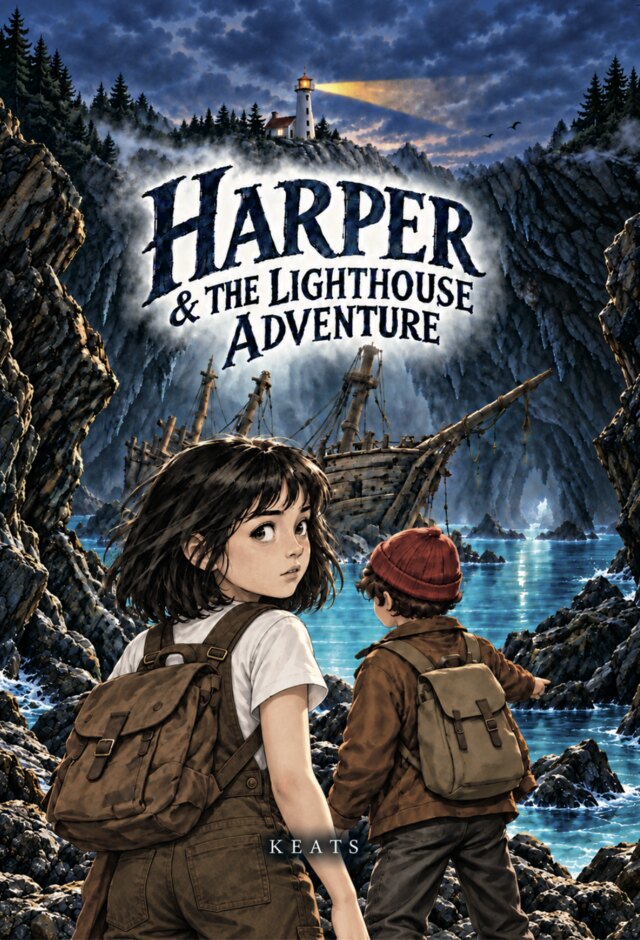
Front cover of Harper and the Lighthouse Adventure. A girl and a boy stand on rocks at the mouth of a sea cave, a wreck behind them and a lighthouse above. Cover lettering reads Harper and the Lighthouse Adventure, Keats.

Harper and the Lighthouse Adventure

Keats Paperback

What secrets lie beneath Greyhaven? Harper expects life at her father’s lighthouse to be lonely. Then she meets Teddy, and together they discover strange markings, hidden sea caves, and an old wreck with a remarkable secret. Could a fortune in lost gold really be hidden along the coast? Harper and Teddy are determined to find out. But they aren’t the only ones hunting for it, and the men following them will stop at nothing to get there first.

ISBN 979-8-9979882-0-3

Buy the paperback

Ordering opens soon.

ISBN 979-8-9979882-0-3

To ask about a copy, write to cuttlefishpress@proton.me.

Forthcoming

A second book is in the works. Title to be announced.

Press release

Cuttlefish Press announces Harper & the Lighthouse Adventure

A lighthouse on the Maine coast. A shipwreck hidden beneath the cliffs. A secret that someone will do anything to keep.

Cuttlefish Press announces the publication of Harper & the Lighthouse Adventure, a new children’s graphic novel by Keats.

Set in 1950s coastal Maine, the story follows Harper and her friend Teddy as they uncover clues to a mystery stretching back to the American Revolution. Their search takes them through hidden passages, dangerous waters, and the forgotten corners of their seaside town. But they are not the only ones following the trail—and curiosity soon becomes a test of courage, resourcefulness, and friendship.

Created for readers approximately 7–11, the book pairs the spirit of classic children’s adventure stories with atmospheric coastal artwork and the pace of a graphic novel.

The book is human-written and creatively directed by Keats, with illustrations created using generative AI under his art direction. Its visual world was developed through detailed planning, reference materials, selection, and repeated revision, with close attention to character, setting, and storytelling.